The Harare Stock Exchange
And Why The Party On Western Stock Markets Should Worry Us - a little.
One of the more interesting observations from Zimbabwe's economic history is that stock market performance often had very little to do with economic prosperity.
In fact, some of the strongest market rallies occurred precisely when confidence in the currency was beginning to collapse.
Repeatedly, as the Zimbabwe Dollar approached another devaluation event, capital flowed aggressively into equities. Market participants may not have had the modern expression "to the moon," but the underlying behaviour was remarkably similar. Investors were not necessarily buying companies because they expected stronger future earnings. They were buying assets because they no longer wanted to hold currency.
This distinction matters.
Most investors are taught that rising stock markets signal economic optimism, improving productivity, or increasing corporate profitability. Zimbabwe demonstrated that another mechanism can exist. A stock market can rise simply because money itself is losing credibility faster than the assets being purchased.
The key variable is monetary expansion.
As monetary mass increases, that capital must find a home somewhere. If confidence in the currency remains intact, much of that liquidity may remain in cash, deposits, or fixed-income instruments. If confidence begins to deteriorate, however, money starts searching for refuge. Property rises. Commodity prices rise. Foreign currencies strengthen. Equities often rally as well.
In this context, rising capital inflows into financial markets can be interpreted as a marker of increasing monetary mass moving through the system. The stock market becomes less a reflection of economic reality and more a transmission mechanism for excess liquidity.
For participants already positioned within financial markets, this can be highly advantageous.
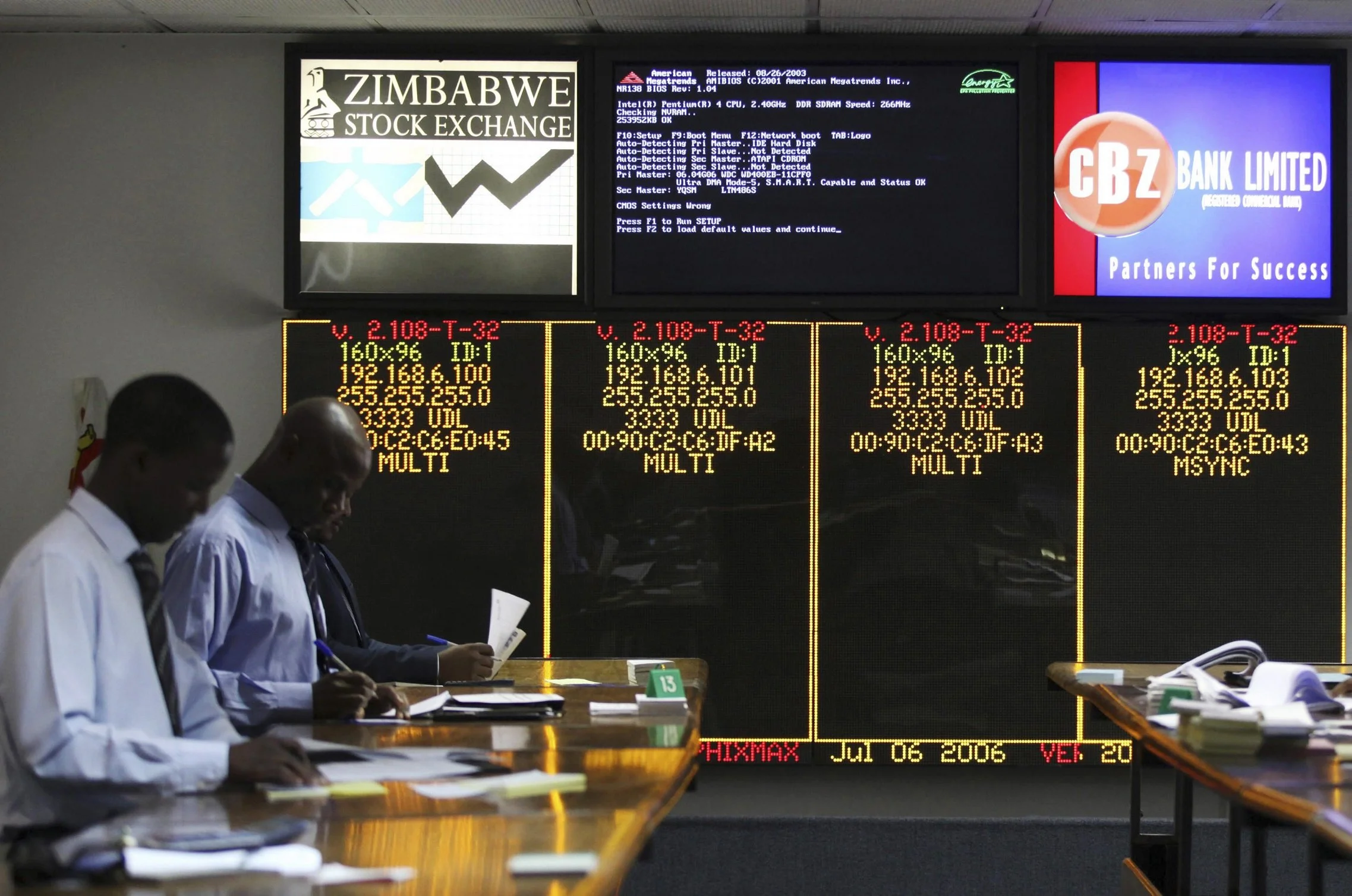
Those who own productive assets effectively surf the wave. Their wealth is maintained and often increased as capital chases a finite pool of investable assets. Meanwhile, individuals who remain primarily exposed to cash holdings frequently experience a decline in purchasing power despite nominal stability in their account balances.
This creates an uncomfortable reality.
A booming stock market does not necessarily mean a healthy economy.
Sometimes it means the financial system is absorbing excess liquidity faster than consumer prices can.
Sometimes it reflects genuine growth and innovation. Sometimes it reflects a loss of confidence in money itself.
Zimbabwe represents an extreme example, but extreme examples are useful because they reveal mechanisms that are otherwise difficult to see.
Not that every rising market is a warning sign.
The lesson is that investors should always ask a simple question:
Are asset prices rising because companies are creating more value, or because more money is chasing the same assets?
The answer determines whether you are investing in growth, or merely participating in a large-scale migration out of cash. From the perspective of wealth preservation, the distinction is often academic.
If you are in the market, you surf the wave.
We invite the reader to look at the big western markets through a Harare lens for a little bit, discover the parallels. And differences.
Systems have a fun way to spontaneously change.
The darker side of the story:
Next week. Same time. 9.19am SAST.
We shall eavluate how what is discussed here abates itself in the real market. The brick-and-mortar kind.