The Harare Stock Exchange - The Dark Side.
Asset Inflation and the Hollowing of Productive Capacity
Most commentary surrounding rising stock markets focuses on investors, portfolios and valuations. Far less attention is paid to the operating reality of the businesses underneath those valuations.
This omission matters. Financial assets can reprice almost instantly. Productive capacity cannot.
A listed company may double in market value within six months. A factory does not double its output in six months.
Nor a mine or power station does not double its generating capacity in six months.
Machine tool ordered today may still arrive eighteen months from now. A swan song.
The engineer required to operate it may take years to train.
Real world systems operate according to industrial timelines.
Financial markets do not.
As monetary expansion accelerates, this distinction becomes increasingly important. Additional liquidity entering the system must find a destination. Initially this may manifest as rising asset prices, increasing market participation and expanding valuations. To investors, this appears as prosperity.
To operators, this often looks very different.
The market value of a business may increase substantially while the underlying economics deteriorate. Replacement equipment becomes more expensive. Inventory costs rise. Working capital requirements expand. Infrastructure bottlenecks become more severe. Labour shortages intensify. Future investment decisions become increasingly difficult to justify.
The result is a divergence between financial performance and productive reality.
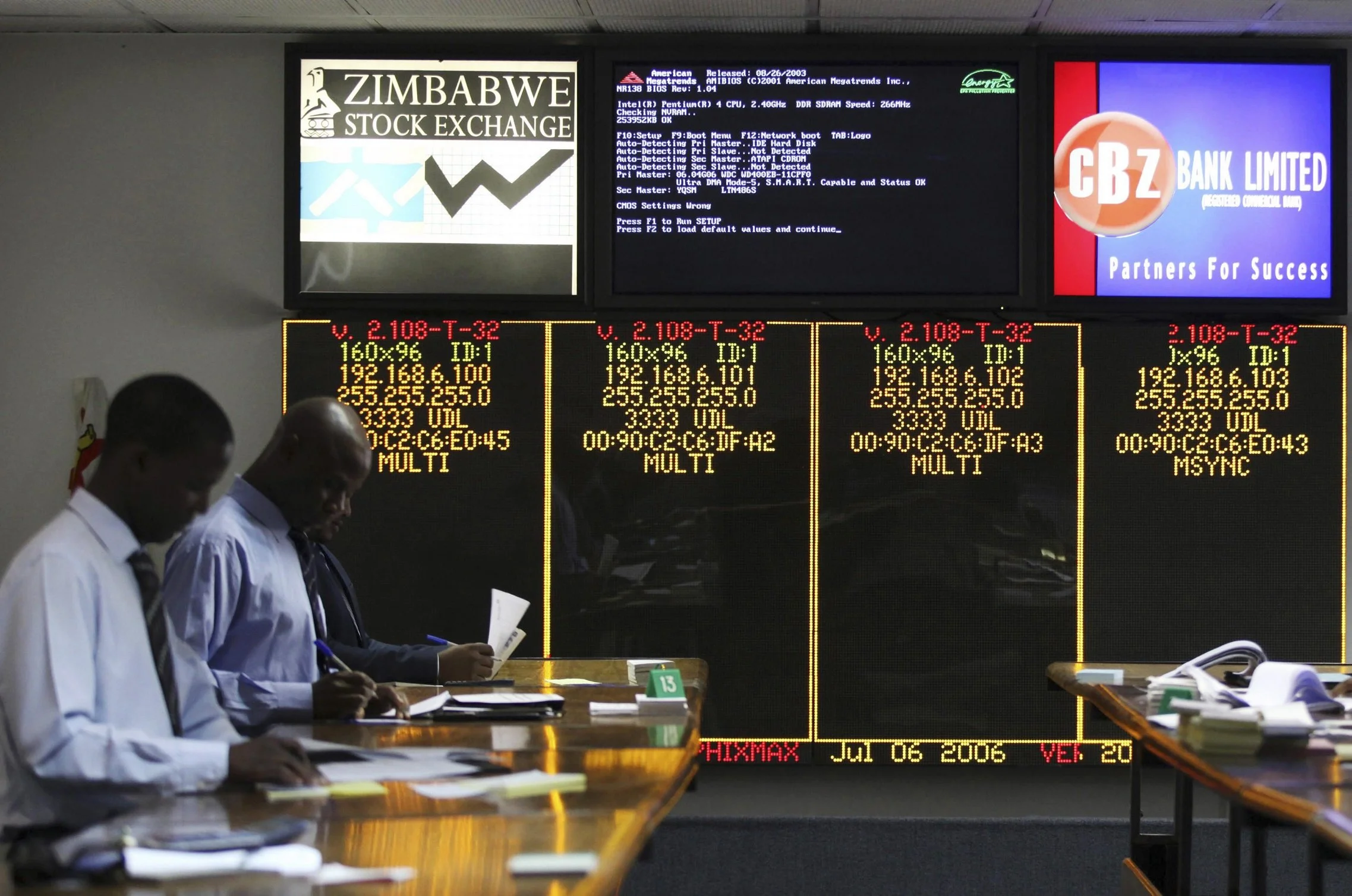
Zimbabwe provided a particularly clear example of this phenomenon. During successive monetary crises, the stock market frequently appreciated at extraordinary rates. On paper, wealth was being created. In practice, many companies were operating in an environment that was becoming progressively more difficult to navigate.
The stock exchange signalled prosperity.
The factory floor signalled distress.
One just needed to take a walk in the streets.
Sentiment of the people in the real world are metrics oftern under-valued. or not taken seriously.
The condition of the real economy is not always visible in financial indicators. Sometimes the warning signs appear first on factory floors, construction sites and in order books.
That’s also one of the reasons why sentiment based prediction platforms like Kalshi and Polymarket are on the rise.
We’ll write about this soon.
This distinction between nominal gains and real gains is often overlooked during periods of rapid asset appreciation. Rising valuations are frequently interpreted as evidence of increasing wealth. In reality, they may simply reflect a larger quantity of money competing for a relatively fixed pool of productive assets.
Let’s be practical:
The owner of a Metal Workshop may discover that the market value of his business has increased tenfold.
Kilns have also increased in price.
Trucks have increased in price, along with raw materials.
Spare parts, service… Potentially - staff.
On paper, the workshop owner has become wealthier.
In reality, his ability to produce additional output may not have improved at all.
The balance sheet expanded.
The capability did not.
At this stage, financial markets and productive economies begin measuring different things.
One measures the quantity of money. The other measures the ability to transform capital, labour and energy into useful output.
For a period, the divergence can remain largely invisible. Asset prices continue to rise. Confidence remains high. Wealth appears abundant.
The problem becomes apparent when capital is required to build something.
A new factory. And this is a problem in most corners of the planet.
Announcements everywhere, tangible growth - That’s different.
Either because the powers that be do not want it. The money can’t buy it and in the worst case a captive maret that doesn’t exist despite the best efforts of the media machine and politicians wanting you to believe the contrary.
Suddenly it becomes clear that financial wealth has expanded far more rapidly than productive capability.
The numbers became larger while the capabilities remained largely unchanged.
From an industrial perspective, the most concerning signal is therefore not a rising stock market. It is a rising stock market occurring simultaneously with declining productive investment, lengthening lead times, ageing infrastructure and shrinking pools of skilled labour.
That is the point at which capital ceases to fund production and increasingly begins funding asset appreciation itself.
The system becomes self-referential.
Money purchases assets.
Assets appreciate.
Higher valuations attract additional capital.
Additional capital drives further appreciation.
Vicious Cycle.
Meanwhile, upstream, the industrial base receives conflicting signals. The factory manager is informed that lead times have extended to two years. Grid connections require multi-year approval cycles. Critical tradesmen are retiring faster than replacements can be trained.
Financial indicators continue to improve.
Industrial indicators continue to deteriorate.
The lesson from Harare is therefore not that stock markets can rise dramatically during periods of monetary instability.
The lesson is that stock markets can rise dramatically while the productive foundations of the economy are simultaneously eroding.
From a distance, both outcomes look identical.
Up close, they are opposites.