Beef with Drones - Pt. 1 why ARCA’s electric future evangelism was exactly that
Concept Art ARCA x ScoutSec
I won’t try to provide a satisfactory answer here. This is merely the opening shot in my musings on UAVs.
Also, this is not to criticise all the amazing engineers over their work, There is merit to the craft. It’s just seen through my lens.
In 2016, long before drones became everyone’s favourite CAD and PowerPoint fantasy, I found myself in the New Mexico desert with ARCA, chasing a problem that sounded deceptively simple:
How do you inspect power lines, reliably and at scale, in South Africa?
The brief was:
An airframe that was nimble, robust, and uncomplicated enough to survive real field conditions. Something that could fly mid-length inspection missions over transmission corridors, carry thermal and visual payloads, and do so without becoming an engineering vanity project.
Naturally, it became one anyway.
ARCA, under Dumitru Popescu, was in one of its more fascinating chapters at the time. There was the rocket work in the background, air-spike engines and all the glorious ambition that came with it, but there was also a detour into electric flight. Exctiting stuff. I was so early in my career - i didn’t care about rocketry that much at the time.
Hoverboards.
Electric VTOL systems.
The works. Sweet.
Massive drone concepts that looked as if tomorrow had arrived ten years too early.
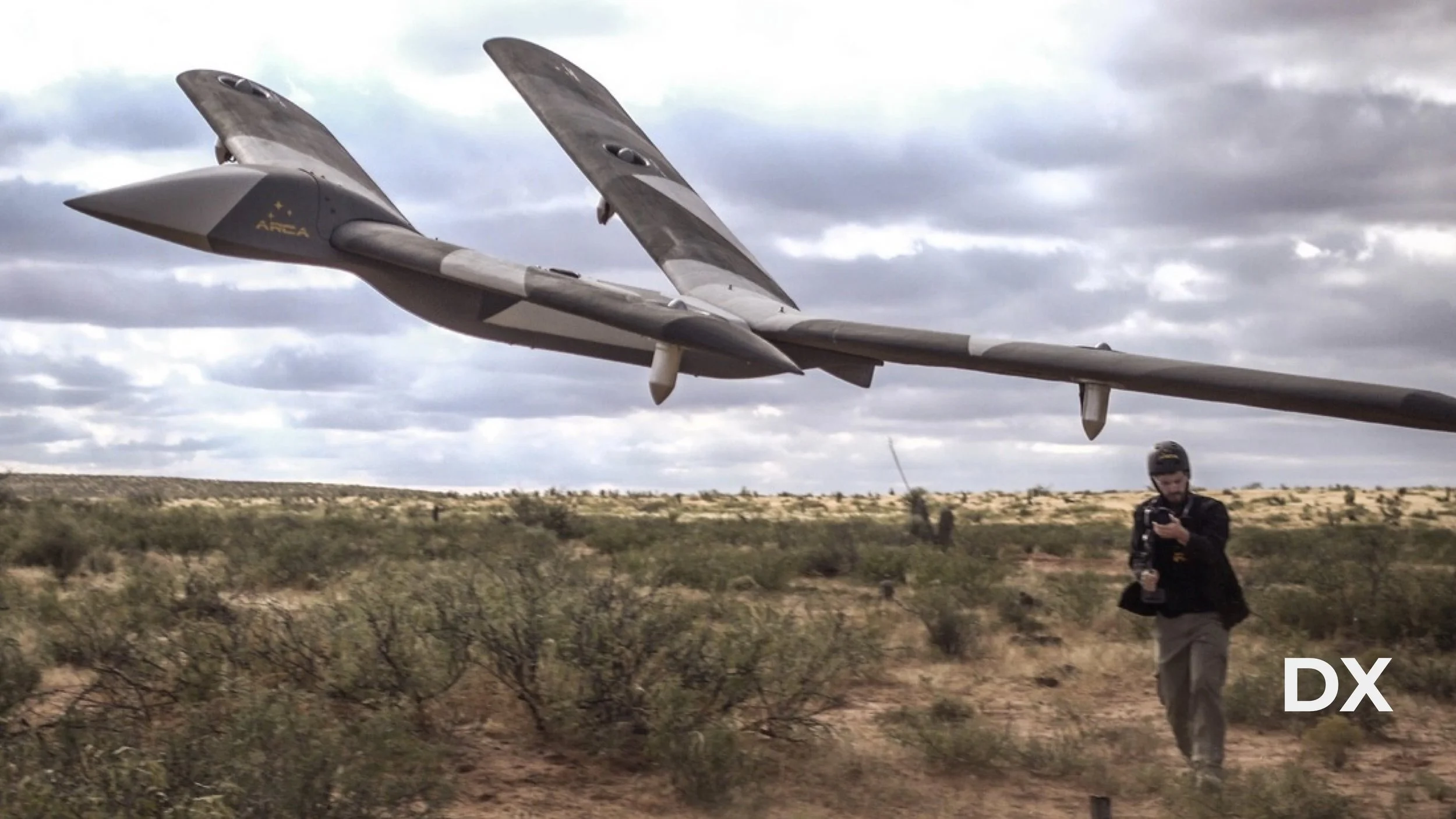
The machine in this image was part of that world.
A double-winged VTOL platform designed around electric propulsion, intended in its later iterations to carry a pivoting thermal payload beneath the fuselage, capable of identifying temperature differentials across insulator strings and transmission hardware.
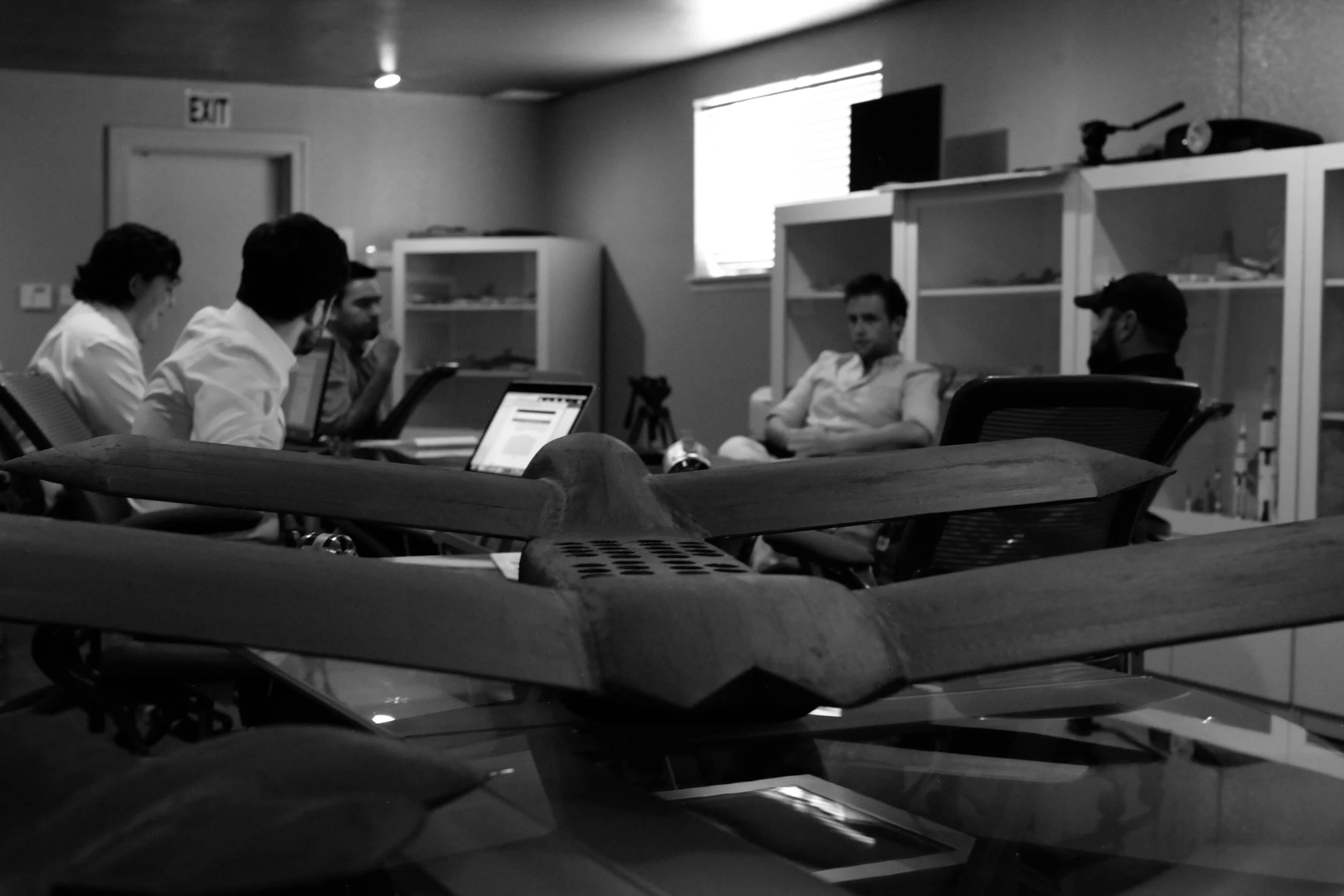
Back Office with Mock-ups
From a systems perspective, it was genuinely elegant.
And that, in many ways, was the problem.
For a long time, I was a complete believer in drone technology.
Not casually interested.
A full fanboy.
The engineering was irresistible. Every iteration promised more endurance, more autonomy, more flexibility. Every designer could project their own version of the future onto the airframe.
And in hindsightm that was the first warning sign.
The better it looked, the less convinced I became that it would survive contact with reality.
Over time, my relationship with drones changed.
Not because the technology disappointed me, the entire commercial premise left a lacklustre taste .
The real question was never whether these systems could fly.
It is: who actually makes money?
Not who you might think.
I concluded, only the people operating fleets at relentless scale ever stood a chance.
And even that only works if the machines are almost always airborne.
Minimal downtime. High utilisation.
Multiple devices per operator.
A ratio that behaves more like infrastructure than aviation.
This is where most drone narratives collapse under their own aesthetics.
If it looks good, it usually won’t work.
If it works, it rarely looks good.
Both outcomes are procedurally boring, and that is precisely why the market keeps ignoring them.
Clients often want us to organise this kind of infrastructure, and yes, operationally, we can.
We can structure the workflow.
We can build the process around the asset.
We can ringfence the uncertainty.
What we cannot do, and what I have become deeply suspicious of promising, is sustainable money where the underlying utilisation model simply does not exist. That is the part the evangelists never want to discuss.
The machine is almost never the problem. We must identify: where is the recurring value?
That, more than anything, is where my disappointment began.
With the premise.
The future was never the issue.
The question was always whether it could carry value.
DX_Treatment